About
I am a senior undergraduate in Computer Science at Shanghai Jiao Tong University (ACM Honors Class, Zhiyuan College). I am currently a research intern at HuLab, University of Wisconsin–Madison, advised by Prof. Junjie Hu. At SJTU, I work in the Advanced Network Laboratory, advised by Prof. Shengzhong Liu and Prof. Fan Wu. Previously, I was a research intern at Audiocc, advised by Prof. Chenda Li and Prof. Yanmin Qian. Friends call me Hugo.
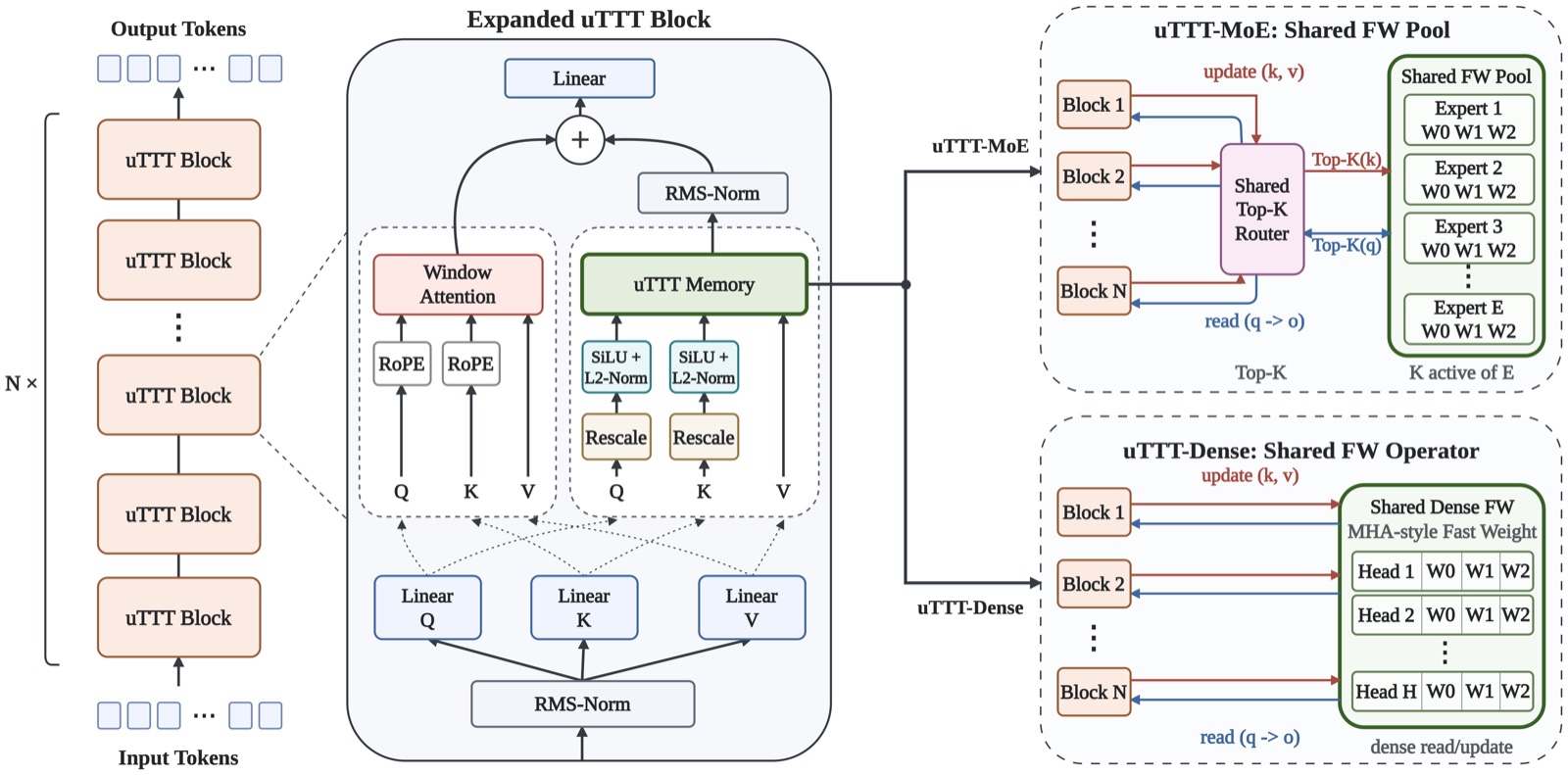
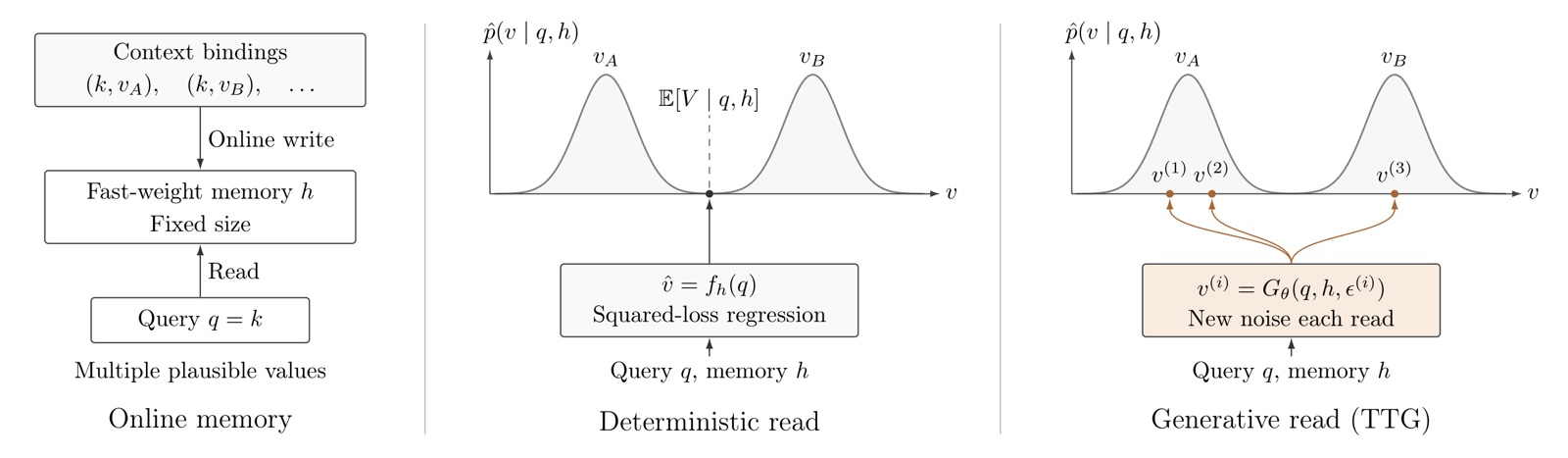
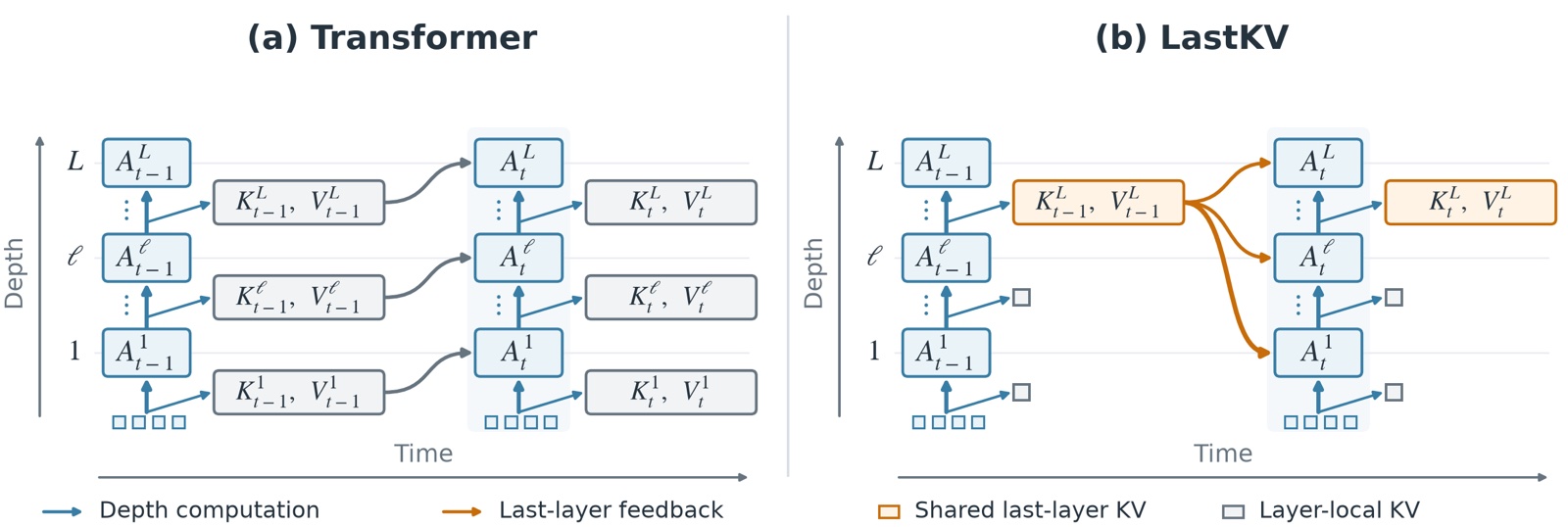
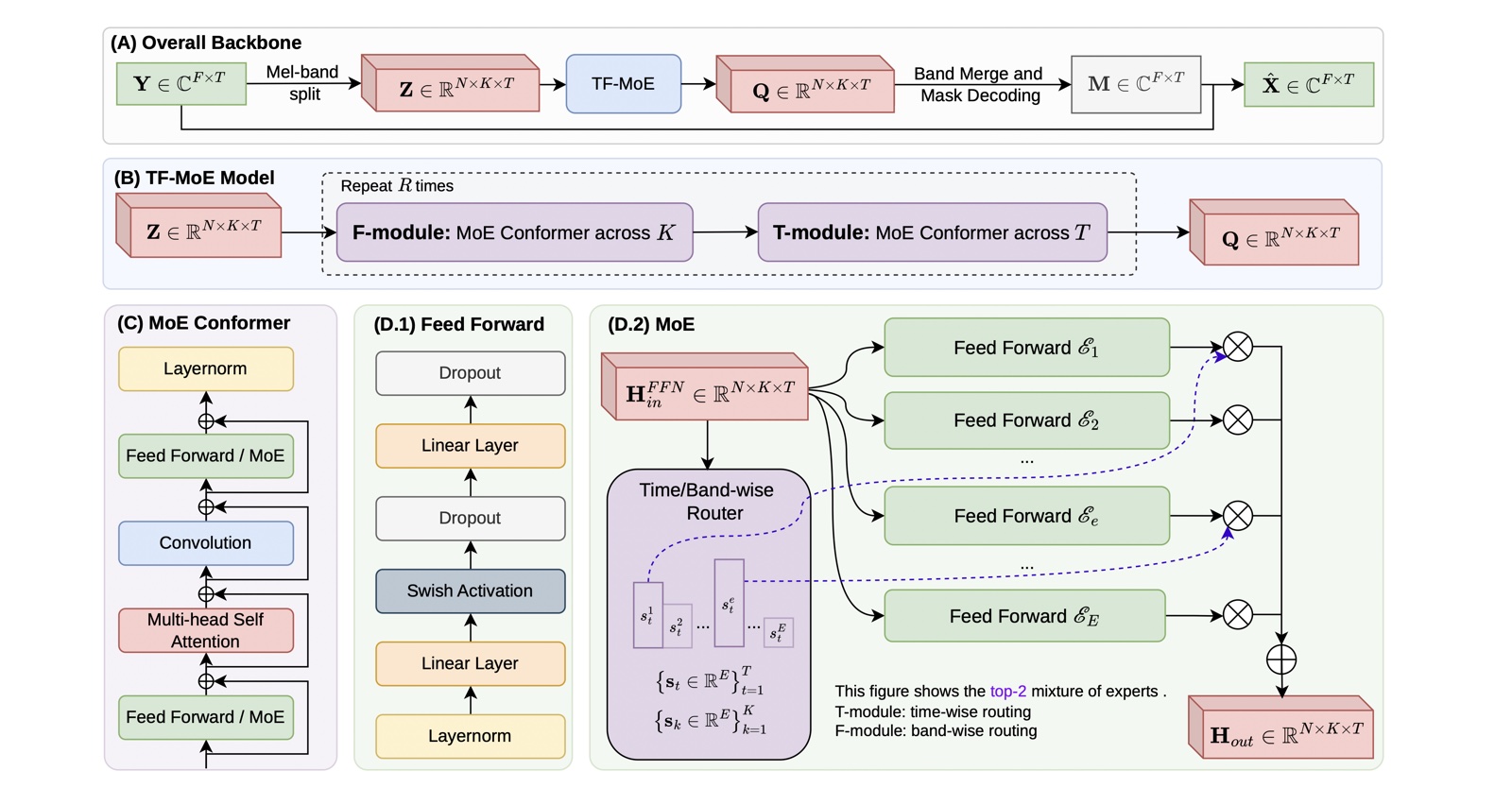
My research focuses on test-time training and model architecture, especially how a model stores and reads memory over a long context. On the storage side, most deep models give each layer its own memory over time, which keeps time and depth apart. My current work unifies the two into a single recurrence: all layers share one fast-weight state in uTTT, and one last-layer KV history in LastKV. On the reading side, TTG reads a fast-weight memory by generation instead of regression. I have also worked on RL post-training for efficient reasoning (SmartThinker, ICML 2026) and sparse Mixture-of-Experts for speech separation (TF-MoE, INTERSPEECH 2026 Oral).
I am always open to collaboration and academic discussion. Feel free to reach me at hugo0713@sjtu.edu.cn or qhu99@wisc.edu, or on WeChat (ID: HUGO--2025).
I am applying to PhD programs for Fall 2027.
Research interests
- Test-time training and fast-weight memory
- Unifying recurrence over time and depth
- Long-context modeling across language and vision
Universal Test-Time Training
* Equal contribution
COLM 2026 Workshop on Efficient Reasoning SpotlightUnder review at ICLR 2027
Shares test-time-training fast weights across all layers instead of keeping one private state per layer, which unifies time and depth into a single recurrence and improves both long-context retrieval and novel view synthesis at equal state size.
Test-Time Generation
Zefan Cai,Qinzhe Hu,Yuchen Zhu,Hao Tan,Tianyuan Zhang,Sai Bi,Haoyi Qiu,Yicong Hong,Haozhe Zhao,Jason Kuen,Haoliang Wang,Ruiyi Zhang,Ryan A. Rossi,Wanrong Zhu,Molei Tao,Wen Xiao,Junjie Hu,Jiuxiang Gu Under review at ICLR 2027
Reads a fast-weight memory by generating from it instead of regressing to one answer, so when a key has several stored values the memory can recall each of them rather than their average; this improves long-context retrieval and novel view synthesis at the same state size.
Last Layer KV Cache is All You Need
Zefan Cai,Sai Bi,Lin Zhang,Yicong Hong,Yuchen Zhu,Lu Li,Haozhe Zhao,Hanwen Jiang,Qinzhe Hu,Zeyi Huang,Shawn Lin,Cheng Luo,Chongjian Ge,Jinlin Jian,Ruijie Zhu,Xun Huang,Jiuxiang Gu,Junjie Hu,Hao Tan Under review at ICLR 2027
Lets every layer read the last layer's KV cache from earlier chunks, which unifies time and depth into a single recurrence for attention. With long-term KV storage cut to roughly a single layer's worth, it still matches or beats standard Transformers on language modeling, novel view synthesis and video generation, and leads the compared architectures on long-context retrieval and most state-tracking tasks.
TF-MoE: Time-Frequency Mixture-of-Experts for Efficient Speech Separation
INTERSPEECH 2026 Oral
A sparse Mixture-of-Experts framework that routes experts over time frames and mel bands, raising the capacity of speech-separation models with almost no extra inference cost, so it outperforms models that need far more compute.
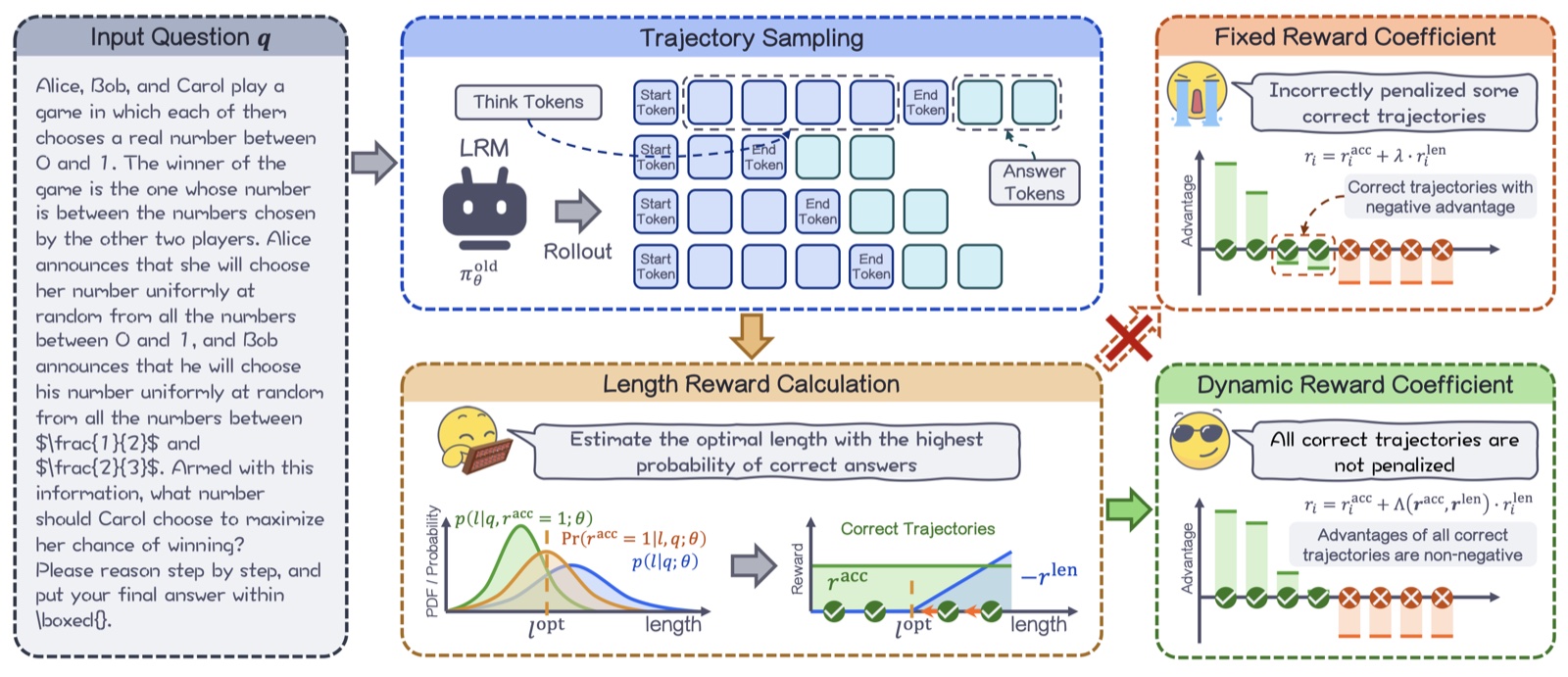
SmartThinker: Progressive Chain-of-Thought Length Calibration for Efficient Large Language Model Reasoning
ICML 2026
An RL method for efficient reasoning that lets the model think only as long as each question needs: during training it estimates the best reasoning length per question and pulls over-long answers toward it, cutting reasoning length by up to half while improving accuracy on benchmarks such as AIME25.
Experience
Research intern, advised by Prof. Junjie HuMadison, WI, USA · on-site since Jul 2026 Three projects on long-context memory, all under review at ICLR 2027. Co-first author of uTTT, which shares one fast-weight memory across all layers; second author of TTG, a generative read-out for fast-weight memory; co-author of LastKV, which lets all layers share one last-layer KV history and shrinks long-term KV storage to roughly a single layer's worth while improving state tracking.
Reinforcement learning and post-training for efficient LLM reasoning, including chain-of-thought compression and on-policy distillation.
Co-built JEDI, an AI participant that joins Jitsi meetings and decides when to speak; owned its Kubernetes-native data layer.
Making speech-separation models cheaper to run without shrinking their capacity, via sparse MoE routing over temporal frames and mel-frequency bands.
Education

上海交通大学 · ACM Honors Class, Zhiyuan College
B.S. in Computer ScienceShanghai, China

新加坡国立大学 · School of Computing · Summer Workshop 2025
Cloud Computing track, grade A+Singapore
First Prize of the course for the group project
JEDI 
湖南师大附中
High schoolChangsha, Hunan, China
Honors
- Zhiyuan Honor Scholarship, awarded to the top 5% of students at SJTU
Service
- Reviewer: COLM 2026, ICLR 2027
Latest notes
Course notes and research notes. English translations of the Chinese originals.
All posts →